

Resistance Of The Communities Of Guatemala Against Dispossession
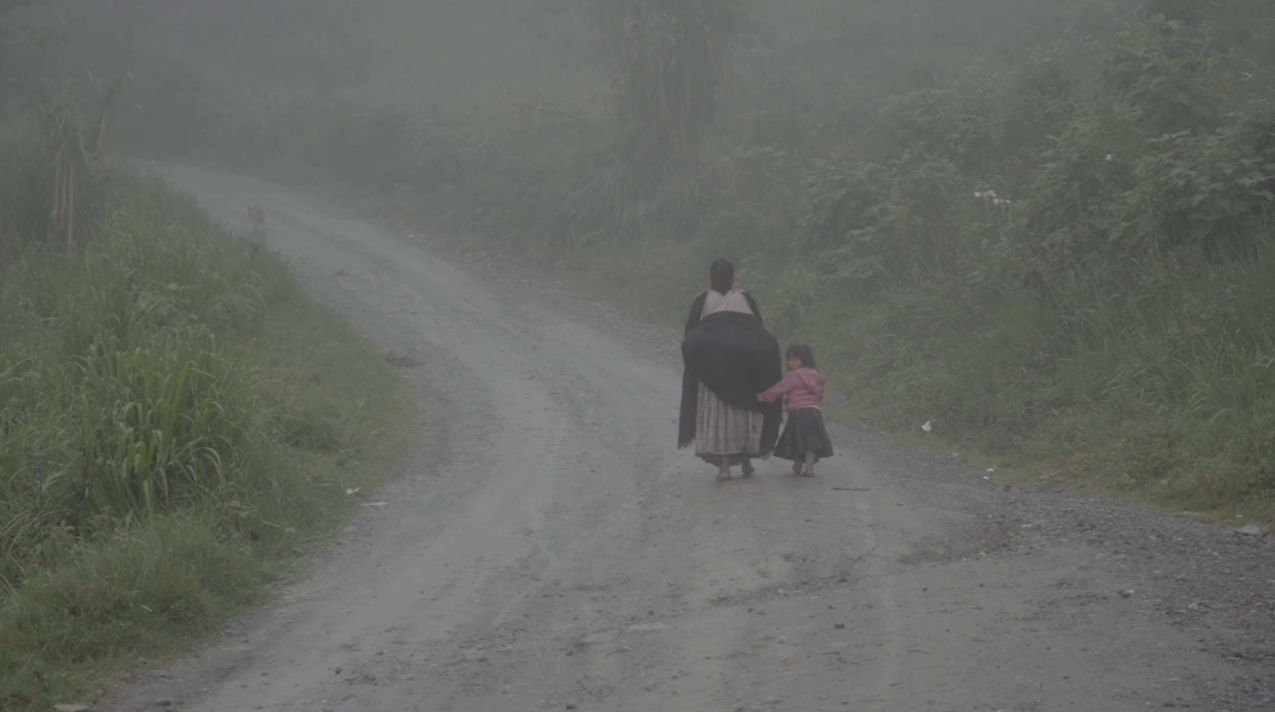
“We are Ral Ch’och, that is to say: we were born, we live and we are on our lands. We cannot go anywhere else other than our own.”
Pascual Miranda, Río Cristalino Community.
The Vist website carries an article on the land struggles in the Verapaces, noting the history of these from colonial times and the continued impact on Indigenous and peasant communities. The work is in Spanish and the introduction is translated below. The article contains graphics, photos, videos and links. Any errors in translation are mine.
To come from the land in the Verapaces
In the north of Guatemala are the departments of Alta Verapaz and Baja Verapaz. Among lush forests live people of Mayan Q’eqchi and Mayan Pocomchi’ origin. In their own language, their people describe themselves as Ral Ch’och, which means son or daughter of the land. These words have an important meaning in an area of high agrarian conflict.
The agrarian problem in Guatemala has deep roots. Different events throughout its history have shaped a social and agrarian structure marked by inequality and permanent conflict. In addition to the dispossession of lands from the native population that the European invasion entailed, there were the liberal reforms of the beginnings of the republic that contravened the recognition of property titles that some indigenous communities had achieved during the colonial period. This process favoured the landowners who settled in the territory, many of them foreigners dedicated to coffee who exploited the labour of the landless peasants.
In this context, the internal armed conflict that lasted 36 years in the country had the land problem at its core, and generated new expulsions and loss of lands that, in many cases, had colonial titles. In the present century, new actors have emerged in the territories in the context of extractive policies and which exerts pressure on indigenous territories. The governments in power have been mostly allies of the economic power of the agrarian sector, to the detriment of thousands of communities, violently forced to leave their lands and homes because they do not have legal security over them.
Alta Verapaz and Baja Verapaz are two of the departments where the most cases of violent evictions are concentrated due to the legal insecurity that indigenous and peasant communities have over the land they inhabit. These communities claim both their ancestral right to live in that place and their role as protectors of the environment and the territory, against agribusiness and other forms of land grabbing that are violating their rights.
In the first seven months of 2024 alone, 15 evictions have been recorded in the departments of Petén, Escuintla, Jalapa, Alta Verapaz and Baja Verapaz. Four of the cases were extrajudicial, carried out by paramilitary groups without prior notification, and 11 were by court order. The biggest problem with the evictions is that families lose all their means of livelihood and are left in inhumane conditions, without shelter and without food.
You can find the full article, in Spanish, here, Las voces de quienes viven entre montañas.
VIST: Visual is Telling
VIST is a non-profit foundation established in Latin America for the creation of a multiplatform content laboratory dedicated to research, design and development of contemporary visual narratives around social and cultural issues. An interdisciplinary meeting space to address the communication and reflection of contemporary issues through new narratives and visual tools that provoke and promote a new way of understanding and thinking about the world we live in.
Categories: Corruption, Criminalisation, Culture, Environment, Evictions, Genocide, Guatemala, Human Rights, Impunity, Indigenous peoples, Justice, Land, Military, Mining, Poverty, Racism, Resource Extraction, Video, Violence
 Guatemala Solidarity Network
Post comments here